EV Finance in Australia: Green Car Loans vs Novated Leases (2026)

By Brent Geihlick - Director at GO2 Finance — Australia-wide finance brokers for EV, car and novated-lease-ready vehicle finance.
Last Updated: July 21, 2026

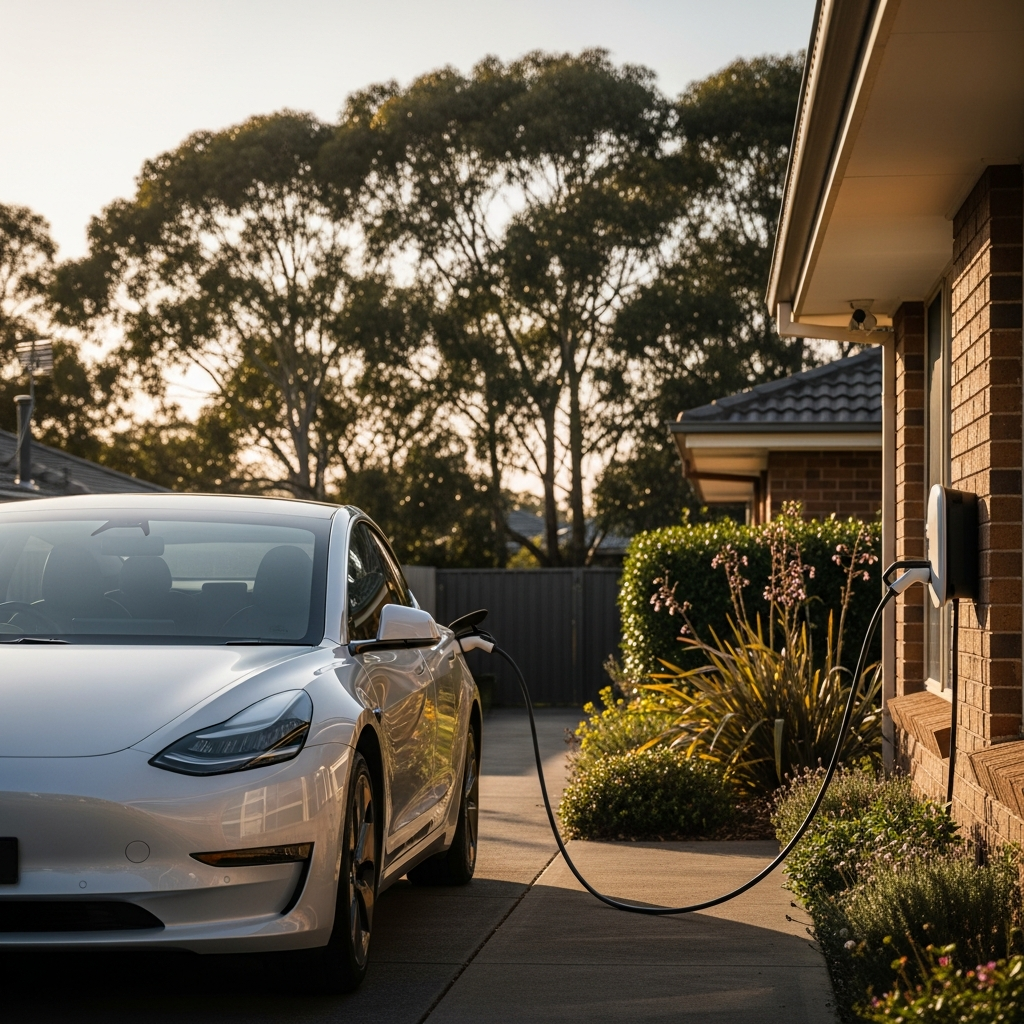
EV finance in Australia is the funding used to buy an electric vehicle — most commonly a discounted green car loan or a novated lease that uses the FBT exemption. The cheapest path depends on whether you are a salaried employee or a business owner, your marginal tax rate, and whether the car sits under the $91,387 fuel-efficient luxury car tax threshold for FY2025-26. Plug-in hybrids lost the FBT exemption for new leases on 1 April 2025.
EV finance in Australia is the funding used to buy an electric vehicle — most commonly a discounted green car loan or a novated lease that uses the FBT exemption. The cheapest path depends on whether you are a salaried employee or a business owner, your marginal tax rate, and whether the car sits under the $91,387 fuel-efficient luxury car tax threshold for FY2025-26 (ato.gov.au). Plug-in hybrids lost the FBT exemption for new leases on 1 April 2025.
How you finance an electric vehicle now matters as much as which EV you choose, because the tax and rate settings around EVs have shifted twice in eighteen months. Most articles simply state that the PHEV exemption ended. This one goes further: I model the exact monthly dollar difference between a standard rate and a green rate on a $60,000 EV, set out the grandfathering rules and the confirmed 2027 phase-down timeline, and share the balloon-structuring framework I apply as EV resale values remain uncertain.
I'm Brent Geihlick, Director at GO2 Finance. This guide is for two audiences: salaried employees weighing a novated lease, and business owners deciding how to fund an electric work vehicle. By the end, you should know which of the two main EV finance paths fits your situation, and what the numbers look like on each.
EV finance covers the same core structures as any car loan but adds two things a petrol car cannot access: discounted green interest rates and the FBT exemption available through novated leasing. The mechanics of borrowing are identical. The pricing and tax treatment are not — and that is where the real difference sits.
A standard secured car loan does not care what fuel your car burns. EV finance in Australia does. Lenders offer green rate discounts, typically 0.5% to 2% below their standard secured rate, for vehicles that meet an emissions threshold. On the tax side, a battery-electric vehicle (BEV) leased through your employer can be exempt from fringe benefits tax entirely, which lets you pay the whole lease from pre-tax salary. No amount of rate-shopping on a petrol car replicates that.
There is a third difference worth flagging early: residual value. EV prices have moved quickly, with manufacturer price cuts flowing through to used values, so structuring any balloon or residual requires more care than it would on a conventional vehicle. I cover my framework for that in the decision section below.
The two paths this article compares are the green car loan (you borrow, you own, you get a discounted rate) and the EV novated lease (your employer packages the lease, and the FBT exemption does the heavy lifting). If you are earlier in the buying process, the car buying budgeting steps cover the groundwork before you commit. You can also review current EV car loan options on our site.
A green car loan suits any buyer who wants to own the vehicle at a discounted rate; an EV novated lease suits salaried employees who can capture the FBT exemption through their employer. The table below maps the key differences for a direct comparison.
| Feature | Green car loan | EV novated lease |
|---|---|---|
| Who it suits | Any buyer, including business owners | Salaried employees via their employer |
| Main tax benefit | Discounted interest rate | FBT exemption on eligible BEVs |
| Indicative cost | From around 6.61% p.a. comparison (Jul 2026) | Pre-tax salary packaging; saving scales with your marginal rate |
| Ownership | You own the vehicle | Financier owns it; you package the lease |
| Key eligibility | Tailpipe CO2 typically ≤125g/km | BEV under the $91,387 LCT threshold |
One practical framing note: whichever path you take, EV running costs partly offset the repayment. Home charging typically costs a fraction of a petrol tank, and servicing is lighter, so a slightly higher purchase price often nets out across a five-year term. When you compare EV finance structures, look at the total monthly cost of ownership, not just the repayment line.
A green car loan is a standard secured car loan with a discounted interest rate for low-emission vehicles, with comparison rates from around 6.61% p.a. as at July 2026. Eligibility turns primarily on emissions: most lenders cap tailpipe CO2 at 125g/km as at 2026, a threshold every battery-electric vehicle clears at zero.
Here is what the discount is actually worth in dollar terms. Illustrative example: finance a $60,000 EV over five years with no balloon. At a standard secured rate of 8.5%, the monthly repayment is roughly $1,231, totalling about $73,860 over the term. At a discounted green rate of 6.24%, the repayment drops to roughly $1,167 a month, about $70,020 in total. That is around $64 less per month and roughly $3,840 in interest saved over five years — on the same car, simply because it plugs in. Plug your own numbers into our EV repayment calculator to model your scenario.
Two things to keep in mind on rates. Green rates are advertised figures: your actual rate depends on your credit profile, the vehicle's age, and the lender's assessment. These are also regulated consumer loans under the National Consumer Credit Protection Act (NCCP Act), so the lender must verify that repayments are affordable for your circumstances before approving, per asic.gov.au responsible lending obligations. No lender can confirm a rate before that assessment is done.
Running cost savings add another layer to the calculation. Fuel and servicing savings on a typical BEV can reduce the real cost of ownership by hundreds of dollars a year, which partially offsets a higher purchase price relative to a comparable petrol car.
Used EVs are eligible for green rates at most lenders, though many apply an age cap of around five to seven years at loan end. A three-year-old BEV generally qualifies without issue. Older EVs may still be financeable, just at a standard secured rate rather than the discounted green one.
Most lenders will finance an EV with no deposit if your credit and income support the application. A 10–20% deposit helps in two ways: it lowers the monthly repayment, and it keeps the loan balance ahead of the car's depreciation curve, which matters more on EVs than on most other assets right now given recent market price movements.
The FBT exemption removes fringe benefits tax on an eligible battery-electric vehicle packaged through a novated lease, provided the car was first held and used after 1 July 2022 and cost less than the fuel-efficient LCT threshold of $91,387 for FY2025-26 (ato.gov.au). Because no FBT applies, the entire lease can run from pre-tax salary — and the saving scales directly with your marginal tax rate.
The position on plug-in hybrids is unambiguous. The ATO's official guidance states:
"From 1 April 2025, a plug-in hybrid electric vehicle will not be considered a zero or low emissions vehicle under fringe benefits tax (FBT) law and isn't eligible for the electric cars exemption." — ATO Official Guidance (ato.gov.au)
What most competitors skip is the grandfathering rule. If you had a binding financial commitment to use a PHEV under a novated lease before 1 April 2025, and that commitment continues unchanged, the exemption keeps applying to that specific lease. The trap is material changes: extending the lease term, changing the financier, or any break in the arrangement generally ends the grandfathering. If you are mid-way through a PHEV lease, do not restructure it without checking the FBT consequence first.
BEVs are not standing still on policy either. In May 2026, the government confirmed a phased step-down of the electric car exemption starting 1 April 2027 (ato.gov.au). The practical timeline breaks down like this:
A lease signed before a change date is generally assessed under the rules in place at signing — which is precisely why timing matters. A compliance point I will not soften: novated lease savings are not a fixed number. They depend on your marginal tax rate, the vehicle's LCT status, and your employer's packaging arrangements. A $45,000 BEV on a top-marginal-rate salary saves considerably more than the same car packaged on a middle income.
The right EV finance option depends on your employment status, marginal tax rate, and whether the vehicle is for private or business use. Salaried employees with salary packaging access generally save most through a novated lease on an eligible BEV; business owners typically find a chattel mortgage is the better structure; everyone else compares green loan rates against their budget.
For business buyers, a chattel mortgage works the same on an electric vehicle as on any other: you own the asset from day one, you can claim the GST on the purchase price upfront if registered for GST, and depreciation plus interest are deductible to the extent of business use. ATO settings on GST, deductions, and any instant asset write-off eligibility should be confirmed with your accountant against current rules. I have compared the structures in detail in chattel mortgage vs personal car loan. Hire purchase and finance leases exist as alternatives, but for most sole traders and small businesses buying one electric vehicle, the chattel mortgage is the default starting point.
A balloon on an EV loan should be sized conservatively, because manufacturer price cuts have pushed some used EV values below the residuals set two or three years ago. No one can predict what any EV will be worth in five years, so the goal is keeping the loan balance under the likely vehicle value throughout the term — not just at the start.
My working framework for 2026: cap the balloon at 20–30% on a five-year EV term (where petrol cars might carry 40%), favour established models with a stable pricing history over brands actively discounting, and if you plan to keep the car past the loan term, skip the balloon entirely and take the lower total interest cost. The full trade-offs are covered in my guide to structuring a balloon payment.
Two quick illustrative scenarios. Sarah, a salaried marketing manager, takes a $58,000 Tesla Model 3 on a five-year novated lease. The car sits well under the $91,387 threshold, so the FBT exemption applies; her lease runs from pre-tax salary, with the saving scaled to her marginal rate. Mark, a sole-trader electrician, finances a $62,000 electric work van on a five-year chattel mortgage with a modest balloon. He claims the GST on purchase and deducts interest and depreciation against business income, keeping the balloon conservative to hedge residual-value risk. Both are illustrative examples only.
Not sure which column you fall into? Send through an online enquiry or book a short phone call and I will model a green loan against a novated lease on your actual vehicle and salary, with no credit hits at the quote stage. Call 0440 131 621.
"Brent sorted our Tesla Model 3 novated lease in under a week and explained the FBT threshold clearly — something two other brokers couldn't be bothered to do." — James R., Melbourne, EV Novated Lease
"We weren't sure whether a green car loan or chattel mortgage suited our small business better. Brent modelled both and the answer was obvious. Great service." — Karen S., Brisbane, EV Chattel Mortgage
GO2 Finance is an Australia-wide broker comparing EV finance across a panel of 50+ lenders, covering green car loans, novated lease referrals and chattel mortgages under one conversation. Here is what that means for you in practice:
What I see at GO2 Finance across the EV applications on my desk: the most common mistake is buyers locking in a vehicle order before verifying the FBT eligibility date and threshold, then discovering delivery slips past a rule change. The second most common is oversized balloons set off petrol-car residual tables. Both are avoidable with a fifteen-minute structure conversation before signing — buyers who sort their finance shape before the dealership visit consistently end up with better terms.
Ready to sort your EV finance? Start with an online enquiry or a short phone call on 0440 131 621 and I will walk you through the green-loan and novated-lease numbers for your situation, side by side. Or apply now to get started.
EV finance is often cheaper than financing an equivalent petrol car, thanks to green loan rates below standard secured rates (comparison rates from around 6.61% p.a. as at July 2026, per bendigobank.com.au) plus lower charging and servicing costs. The final answer depends on vehicle price, your approved rate and how long you keep the car.
The vehicle must be a battery-electric vehicle first held and used on or after 1 July 2022, priced under the fuel-efficient LCT threshold of $91,387 for FY2025-26, and provided through a qualifying employment arrangement such as a novated lease (ato.gov.au).
A green car loan is a secured car loan with a discounted interest rate for low-emission vehicles. Most lenders cap tailpipe CO2 at around 125g/km, which every battery-electric vehicle meets at zero. You borrow, you own the car, and you pay less interest than on a standard loan.
PHEVs are no longer treated as zero or low-emission vehicles for FBT and cannot access the exemption on new leases from 1 April 2025 (ato.gov.au). Binding commitments made before that date can be grandfathered provided the arrangement stays unchanged.
Savings vary with your marginal tax rate and the vehicle's LCT status. The exemption removes FBT on an eligible BEV, so the saving equals the tax you would otherwise pay on the packaged amount; higher earners on cars under the $91,387 threshold save the most. There is no fixed dollar figure applicable to all employees.
If you change employers mid-term, the novated lease does not automatically transfer. You have three options: your new employer takes over the lease arrangement, you convert the lease to a standard car loan in your own name, or you terminate early and pay any residual shortfall. The most common outcome is negotiating a novated lease with your new employer using the existing vehicle — check whether your new employer's salary packaging provider supports this before you resign.
Stamp duty and registration are calculated on the vehicle's purchase price, not its finance structure. Several states — including [VERIFY: current state-by-state stamp duty concession list for EVs from relevant state revenue office websites, as concessions change frequently] — offer stamp duty concessions or exemptions for battery-electric vehicles. Check your state's revenue office before purchase, as this can reduce the amount you need to finance.
[VERIFY: current instant asset write-off threshold and eligibility rules from ato.gov.au for the current financial year — thresholds and phase-out dates change with each Federal Budget.] Where the write-off applies, a business purchasing an EV outright or under a chattel mortgage may be able to deduct the full cost in the year of purchase, subject to business-use percentage. Confirm the current threshold with your accountant before structuring the purchase.
GO2 Finance compares green car loan rates across a panel of [VERIFY: current lender count from GO2 internal records] lenders. Because green rate eligibility criteria differ — some cap CO2 at 125g/km, others at 0g/km (BEVs only), and age caps on used EVs vary — comparing across the panel, rather than applying to one lender directly, is the fastest way to find the lowest rate your profile qualifies for.
Brent Geihlick is the Director at GO2 Finance and an ASIC-registered Credit Representative (number 565185), operating under Australian Credit Representative 563274. He is a member of the Finance Brokers Association of Australasia (FBAA) and the Australian Financial Complaints Authority (AFCA, member 112294).
GO2 Finance is an Australia-wide finance broker working across a panel of 50+ lenders. The team helps consumer and business clients secure caravan, car, equipment, personal and commercial finance with no credit hits at the quote stage.
You can reach Brent directly by phone on 0440 131 621 or via the about page.
This article is general information only and does not take into account your personal financial situation. Consider speaking with a licensed broker or financial adviser before making a decision.
At Go2 Finance, we like to help, providing you with updated information, news, and tips to ensure you find the best financing.