Car Loans for Self Employed in Australia: The Complete 2026 Guide

By Brent Geihlick - Director at GO2 Finance — Australia-wide finance brokers for car, trucks and utes.
Last Updated: August 26, 2026

By Brent Geihlick - Director at GO2 Finance — Australia-wide finance brokers for car, trucks and utes.
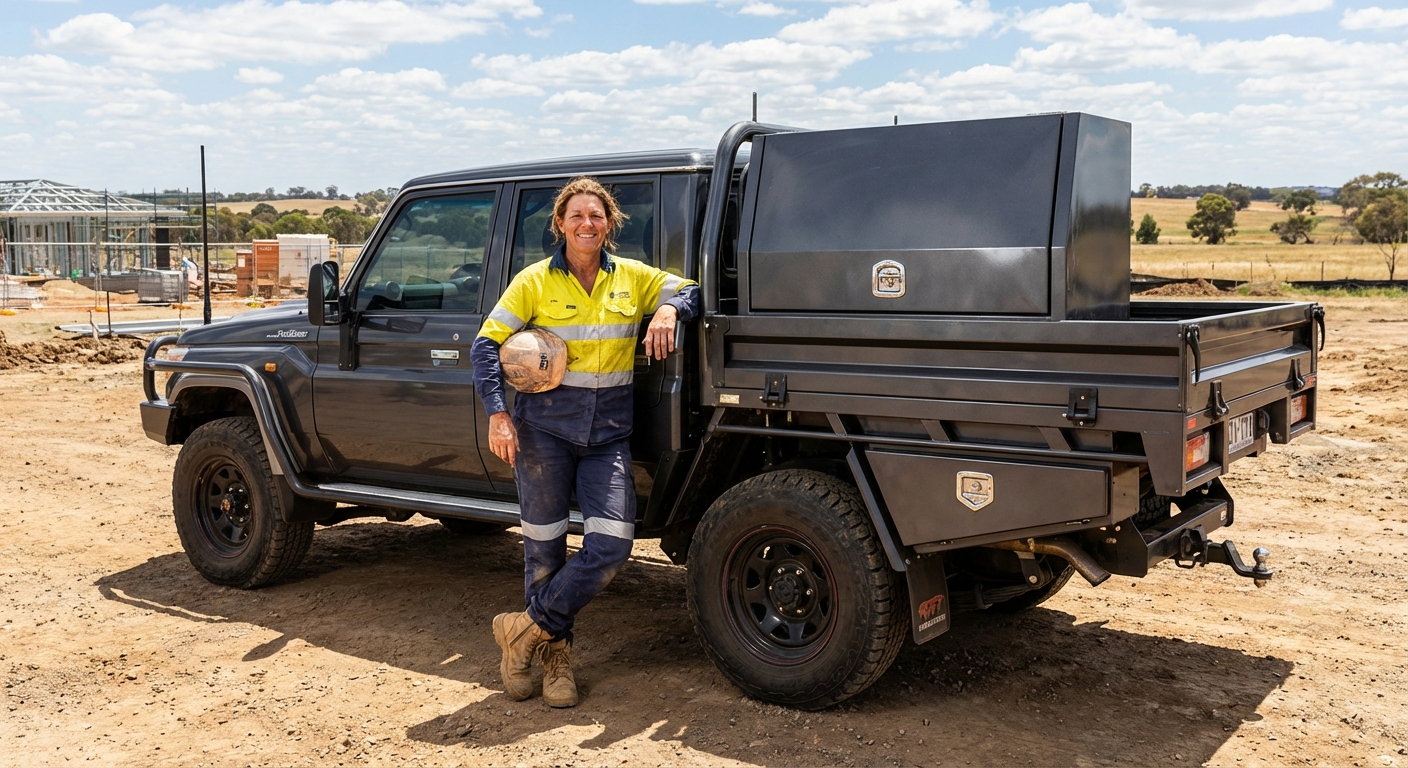
For many Australians, being your own boss is the ultimate dream. Whether you are a tradie, a freelance consultant, or a small business owner, the freedom of self-employment is unmatched. However, that freedom often comes with a frustrating hurdle: getting approved for finance.
If you have ever walked into a major bank branch to ask for a car loan, only to be turned away because you could not provide two years of up-to-date tax returns, you are not alone. Traditional lenders often view self-employed applicants as "high risk" simply because their income fluctuates or their paperwork isn't standard.
At GO2 Finance, we see things differently. We understand that your taxable income doesn't always reflect your actual cash flow or ability to repay a loan. Led by our director Brent, the team at GO2 Finance specialises in helping Australian business owners navigate the complex world of ABN finance to secure the vehicles they need to keep moving.
Self-employed Australians are not locked out of car finance — but the standard bank process works against you if your accountant has legitimately minimised your taxable income. The solution is a Low Doc car loan structured as a Chattel Mortgage (for business use) or a consumer loan (for personal use), applied for through a broker who knows which lenders assess real cash flow rather than just your tax return bottom line.
If you hold an ABN and have been trading for at least six months, you have options. This guide explains how lenders assess self-employed income, which loan structure suits your situation, what documents you need, and how the process works in practice in 2026.
The primary reason self-employed Australians face rejection from major banks is the way income is assessed. When an employee applies for a loan, they provide payslips — clean, consistent, and easy for an automated credit system to approve.
When you are self-employed, your income is rarely that simple. You may have seasonal fluctuations. More importantly, good accountants often work hard to minimise your taxable income to reduce your tax bill. While this is great at tax time, it looks concerning to a bank's automated credit scoring system. The bank sees a low net profit and assumes you cannot afford repayments, even if your business has strong cash flow.
This disconnect between taxable income and actual repayment capacity is where a specialist broker like GO2 Finance steps in. We know which lenders look at the bigger picture rather than just the bottom line of a tax return.
If you do not have up-to-date financial statements or tax returns, the most common solution is a Low Doc (Low Documentation) car loan.
A Low Doc loan is a commercial finance product designed specifically for ABN holders. Instead of requiring two years of tax returns and financials, the lender accepts alternative forms of proof to verify your income — typically a self-declaration, your last two BAS statements, or three months of business bank statements.
Eligibility varies between lenders, but generally you need to meet the following criteria:
You may see references to "No Doc" loans — where a signed declaration of affordability alone is sufficient. In practice, pure No Doc products are rare in the current market. Most lenders described as "No Doc" still require at least one supporting document alongside a self-declaration. If your situation is unusually strong (significant asset backing, excellent credit), ask us whether a reduced-doc pathway applies to you. We will not submit you to a product that does not exist for your profile.
Before applying, it is critical to determine whether the car is for business or personal use, as this dictates the loan product and the consumer protection laws that apply.
If you use the vehicle more than 50% for business, a Chattel Mortgage is the industry standard in Australia.
The 2026–27 Federal Budget (12 May 2026) announced that the $20,000 instant asset write-off for small businesses with aggregated turnover under $10 million will be made permanent from 1 July 2026. As at August 2026, this measure is contained in the Treasury Laws Amendment (Tax Reform No. 2) Bill 2026, which had not yet passed Parliament. If the Bill becomes law, an eligible business vehicle purchased for under $20,000 (ex-GST) could be immediately written off in the year of purchase rather than depreciated over time — a meaningful cash-flow benefit. Confirm the legislation's status with your accountant before making purchasing decisions based on it. ATO — instant asset write-off
For a deeper comparison of loan structures for sole traders, see our guide: Chattel Mortgage vs Personal Car Loan for Sole Traders.
If the car is mostly for personal use — school runs, weekends, family trips — a standard consumer loan is appropriate. These are regulated under the National Consumer Credit Protection Act 2009 (Cth) (NCCP Act), which provides important consumer protections including responsible lending obligations. Legislation.gov.au
Consumer loans typically require standard income verification — payslips or full tax returns — which creates the same challenge for self-employed borrowers described above. GO2 Finance can still help you find lenders who understand self-employed income verification for consumer loans, even if the vehicle is for personal use.
Getting approved requires a slightly different strategy than a standard employee application. Follow this roadmap to improve your chances.
1. Check your credit score
Since you are not providing full financials, your credit history becomes your most valuable asset. Ensure your file is clear of defaults or late payments. A strong credit score tells the lender that, despite the lack of tax returns, you are a reliable borrower. See also: how multiple loan applications affect your credit score.
2. Confirm your ABN status and GST registration
Lenders assess self-employed applications differently depending on trading history:
Also confirm whether your GST registration is current if you plan to claim GST credits — some lenders require active GST registration as a condition of low-doc approval.
3. Determine your deposit position
Putting down a deposit — cash or trade-in — reduces the lender's risk and can help secure a better rate. 100% (no-deposit) finance may be available for well-established businesses with strong credit, but it is lender- and asset-specific, not universal. We will be upfront with you about what is realistic for your profile.
4. Speak to a specialist broker first
Avoid submitting applications to multiple banks online. Each hard enquiry is recorded on your credit file, and a cluster of them within a short period signals risk to lenders. Instead, speak to GO2 Finance first. We assess your full situation — ABN tenure, credit history, income documents, vehicle type — and submit to the one lender most likely to approve you at a competitive rate.
At GO2 Finance, we act as the bridge between your business and the lenders. We have established relationships with a panel of lenders — many of whom do not deal directly with the public — who specialise in self-employed and low-doc applications.
We understand how to present your application. If your tax returns show low income due to depreciation or one-off expenses, we can include submission notes explaining the reality of your cash flow. We may use Business Activity Statements (BAS) or business bank account summaries to demonstrate serviceability, bypassing the automated rejection that too often comes from major banks.
From mid-2026, the expansion of the Consumer Data Right (CDR) to non-bank lenders also means some lenders can now — with your consent — access bank transaction data directly, which is beginning to simplify income verification for some self-employed applicants. We will let you know if this pathway suits your situation.
We aim to keep the paperwork as light as possible. Having these ready will speed up the process:
For ABN holders using the vehicle predominantly for business, a Chattel Mortgage can offer several tax advantages. These are general principles only — confirm your specific entitlements with a qualified accountant:
Yes, but your options are narrower and a deposit is more likely to be required. Some lenders on our panel accept ABNs registered for as little as six months, particularly if you have a clean credit file and a strong deposit. The longer your ABN trading history, the more options and better rates become available.
Not always — an ABN alone meets the basic eligibility threshold for most low-doc products. However, some lenders specifically require GST registration as a condition of approval. If you intend to claim GST credits on the vehicle, you must be registered for GST. Businesses with annual turnover over $75,000 are required to register.
Rates vary significantly by lender, credit profile, trading history and loan-to-value ratio. As a general guide, established SMEs with clean credit history have been seeing indicative chattel mortgage rates from the high-6% p.a. range into the 9% p.a. range in mid-2026. Low-doc files with shorter trading history or credit blemishes typically price higher. Rates change frequently — see our car loan interest rates guide for current context, and use our repayment calculator to model your scenario.
We conduct an initial soft assessment before submitting any formal application. A hard credit enquiry only occurs when we submit to a specific lender — and we aim to do that once, to the right lender, not multiple times across different banks.
Yes. Pre-approval lets you know your budget before you start negotiating. See how the process works in our guide on car loan pre-approval in Australia.
Low-doc finance applies to both new and used vehicles, though lenders may apply age and kilometre limits to used cars. Our guide on used car loans in Australia covers the typical lender rules.
Ready to explore your options? Contact GO2 Finance or get a quote — we will assess your situation before any application is lodged.
Choosing the right broker is just as important as choosing the right car. Here is why Australian business owners trust GO2 Finance:
If you are tired of explaining your business to bank tellers who don't understand how you operate, it is time for a different approach.
Ready to get moving? Contact GO2 Finance today for a quick, obligation-free quote on your new business vehicle.
Brent Geihlick, Director at GO2 Finance
Brent Geihlick is the Director of GO2 Finance, a trusted Australian brokerage specialising in car, caravan, boat and equipment loans. With extensive experience across asset finance, lending strategy and credit assessment, Brent has helped thousands of Australians secure affordable loans through clear, honest and personalised guidance.
Brent works directly with clients and over 50 lending partners, giving him deep insight into how credit scoring, loan approvals and lender policies operate behind the scenes. His approach is simple: make finance transparent, protect clients from unnecessary credit damage, and match every borrower with the right lender for their goals.
Every article Brent publishes is based on real industry experience, current lending guidelines and practical day to day knowledge from working inside Australia’s finance landscape.
General advice only: This guide provides general information and doesn’t take into account your objectives, financial situation or needs. Consider whether it’s appropriate for you and read the lender’s T&Cs and comparison rate examples. Seek independent tax advice for chattel mortgages or any business use.
At Go2 Finance, we like to help, providing you with updated information, news, and tips to ensure you find the best financing.